Adoption
Why small teams abandon their CRM
Most CRM projects fail for reasons that have nothing to do with features. What actually goes wrong, and what to do about it before you buy anything.
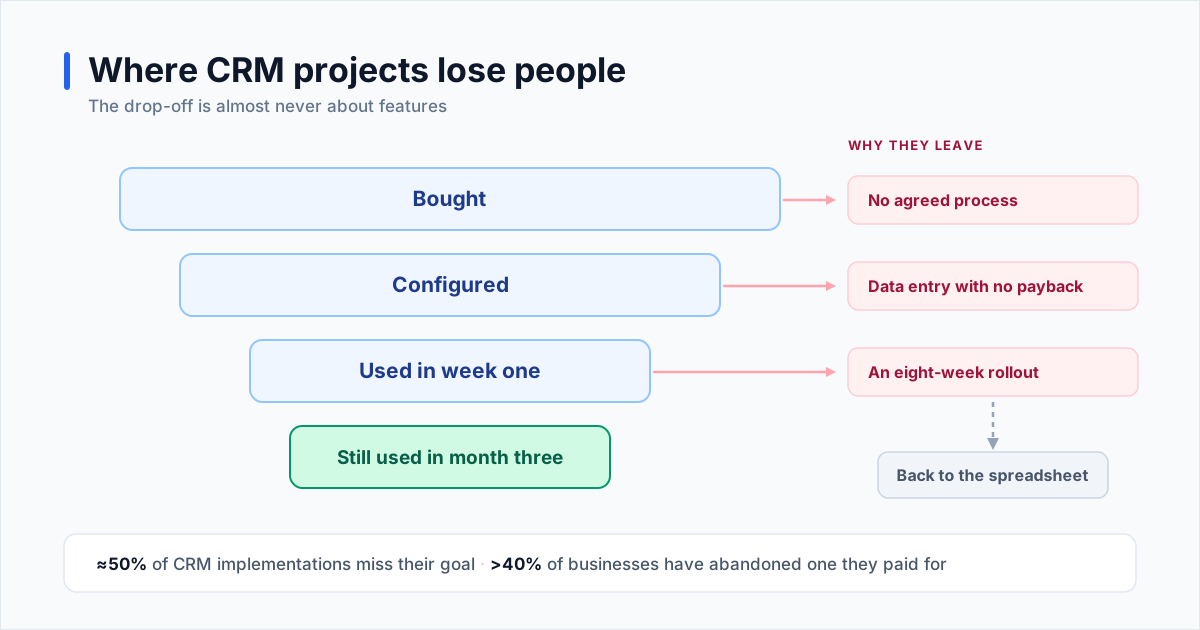
The uncomfortable number first: depending on who is counting, somewhere between a third and three quarters of CRM implementations do not achieve what they set out to. Analysts put it around 50 to 55 per cent. More than 40 per cent of businesses have abandoned a CRM they previously paid for.
If you have already been through one of those, you are not being unreasonable when you hesitate over the next one. You are pattern-matching on real experience. The useful question is what separates the projects that stick from the ones that quietly die.
It is almost never the feature list
The most commonly cited cause of failure is poor user adoption - roughly half of failed projects. Not missing functionality. Not the wrong vendor. The software was bought, configured, and then not used, until the spreadsheet quietly came back.
This is why comparison grids mislead. A tool that does ninety things your team will never touch is not safer than one that does nine things they will. It is more dangerous, because every unused field is another reason for a salesperson to decide the CRM is admin rather than help.
The three failures we see most
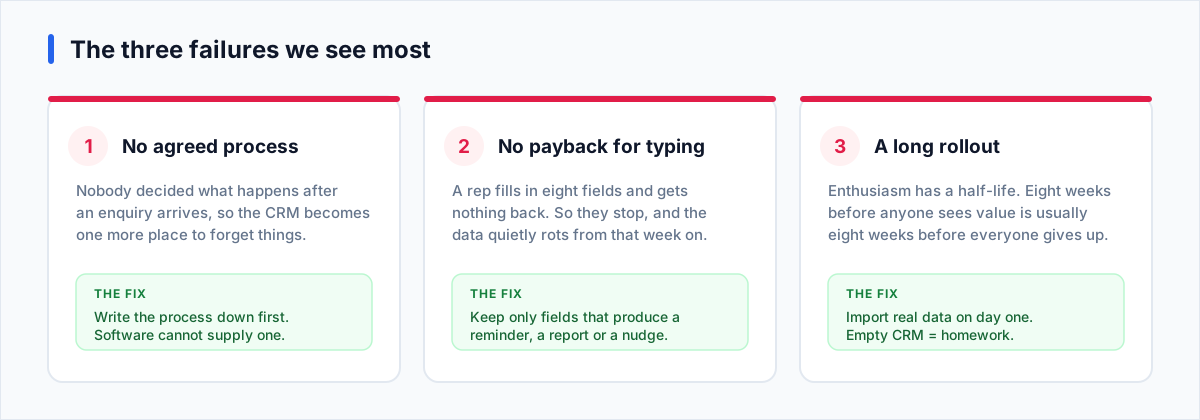
- No agreed process. If the team has not decided what should happen after an enquiry arrives, the CRM becomes one more place to forget things. Software cannot supply a process you have not chosen.
- Data entry with no payback. If a rep fills in eight fields and gets nothing back, they will stop. The fields that survive are the ones that produce a reminder, a report, or a nudge the rep actually wanted.
- A long implementation. Enthusiasm has a half-life. A project that takes eight weeks before anyone sees value usually never gets there.
What actually triggers a successful switch
In practice it is rarely a feature. It is an event, and it is usually one of four.
- A lead visibly falls through the cracks and it costs real money.
- The second or third salesperson joins, and handovers start failing. One person can hold a pipeline in their head. Three cannot.
- A salesperson leaves and takes the pipeline with them, because the history was in their personal WhatsApp and their own memory.
- An investor, a buyer or a bank asks for a pipeline report, and assembling it takes three days.
The competitor is not another CRM. It is the memory of a CRM that already failed once.
What to do instead
Decide the process before the software. Write down what happens when an enquiry arrives, who owns it, and what "done" looks like. Then pick a tool that can express that in an afternoon rather than a quarter.
Import your existing data on day one, not in phase two. A CRM with fifty of your real accounts in it is a tool. A CRM with nothing in it is homework.
And measure adoption before anything else. If nobody logged in this week, no report built on that data means anything. Adoption is not a soft metric; it is the precondition for every other number.
Try Desk CRM
Pipelines, follow-up reminders, and a record of everything your team did — built for small sales teams.